
The Project Car Guide to Buying Aftermarket Turbos

Last Updated: November 24, 2026
Quick Summary
Buying aftermarket turbos means budgeting well beyond the unit itself: fuel system, engine management, intercooling, exhaust, heat management, fabrication, and labor routinely push total cost past the sticker price. Start with a realistic horsepower target, then choose a kit with engineered fitment for your platform rather than a custom build. Confirm exact engine code, trim, and included hardware before ordering.
- A PRL 4847RS drop-in for the 10th Gen Civic 1.5T lists at $1,410.17.
- The Garrett PowerMax kit for the 2.7L EcoBoost is $3,221.79 and supports up to 640 hp.
- Size the turbo to a realistic horsepower target, not your dream number.
- Fuel, tuning, intercooling, and internal strength are the non-negotiable supporting mods.
- Verify year, engine code, and trim, since 10th and 11th Gen 1.5T units differ.
Table of Contents
- How much does an aftermarket turbo cost?
- Turbocharger sizing for project cars and horsepower targets
- The full aftermarket turbo cost beyond the unit itself
- Turbo kit vs. custom turbo build: which fits your project
- Supporting mods for a turbo build you cannot skip
- Checking fitment and build quality before you buy
- Choosing your aftermarket turbo at Axion Performance Parts
- Frequently Asked Questions
How much does an aftermarket turbo cost?
At Axion Performance Parts, we have sold turbo upgrades since 2009, and a common mistake is buyers budgeting for the turbo alone. The supporting hardware, tuning, and labor are where project budgets actually die.
Here are some current listings. A PRL 4847RS drop-in for a 10th Gen Civic 1.5T lists at $1,410.17. The same turbo for an 11th Gen Civic or Integra 1.5T runs $1,360.89. A Garrett PowerMax direct-fit upgrade for a 2.7L EcoBoost Bronco or Ranger is $3,221.79, and it arrives as complete left- and right-hand assemblies with calibrated actuators, clamps, hoses, and an inlet adapter.
That difference matters because a drop-in turbo and a full assembly solve different problems. A drop-in replaces the factory unit in the factory footprint. A direct-fit assembly replaces both turbos on a twin-turbo engine, and the Garrett PowerMax kits carry CARB emissions certification.
Watch out: the price on the product page is not your build cost. Turbo sizing, fuel system headroom, tuning, and heat management all add up.
Turbo unit prices by application
Turbocharger sizing for project cars and horsepower targets
Turbocharger sizing for project cars starts with one number: your realistic horsepower target, not your dream number. Compressor and turbine wheels are matched to airflow, which is set by engine displacement and boost pressure. Pick the target first, then size the turbo to hit it with headroom to spare.
Engine displacement sets the baseline. A 1.5T four-cylinder and a 2.7L V6 move very different air volumes, so the same turbo behaves completely differently on each. The Garrett 2.7L kit is listed as supporting up to 640 hp, with a 41mm billet compressor wheel against the OEM 34mm and +42% compressor flow and +27% turbine flow. The PRL 4847RS takes the opposite approach: a 7075 point-milled compressor wheel and Inconel turbine on a factory footprint, tuned for stock-like spool rather than peak numbers.
That is the trade-off nobody puts on a spec sheet. Bigger wheels flow more air, but they generally spool later. Match the turbo to how you actually drive.
- Daily driver plus occasional track: prioritize spool, accept a lower ceiling
- Dedicated track car: size for peak airflow, tolerate lag
- Towing or heavy load: prioritize turbine flow and heat tolerance
The full aftermarket turbo cost beyond the unit itself
The full cost of an aftermarket turbo build is the unit plus fuel system, engine management, intercooling, exhaust, heat management, fabrication, and labor, and that total routinely exceeds the turbo's sticker price.
Start with the unit and the hardware that must ship with it.
Fuel is the first real constraint. More airflow generally needs more fuel, which often means upgraded injectors and a pump sized to your target.
Intercooling and exhaust follow. Compressed air gets hot, and a factory intercooler sized for factory boost becomes a restriction once you raise pressure; a larger core and piping are common line items.
Heat is the quiet budget killer. We stock thermal solutions for exactly this reason, including a carbon fiber turbo blanket that fits T3, T3/T4, T25, T28, and GT-series turbine housings.
Fabrication and labor are where estimates drift.
| Cost Layer | What It Covers | When It Becomes Mandatory | Planning Note |
|---|---|---|---|
| Turbo unit | Drop-in or direct-fit assembly | Day one | Confirm included hardware |
| Fuel system | Injectors, pump, lines, fittings | Before raising boost | Size to horsepower target |
| Engine management | Tune and calibration, dyno time | Before first full-throttle pull | Not optional |
| Intercooling | Larger core, piping, couplers | When factory core is a restriction | Match to boost pressure |
| Exhaust | Downpipe, manifold if needed | With the turbo install | Match turbine outlet |
| Heat management | Blanket, shielding, wrap | With the turbo install | Cheap insurance |
| Fabrication | Cutting, welding, brackets | Custom builds only | Time and money sink |
| Labor | Install and dyno sessions | Install day | Varies by platform |
| Maintenance reserve | Oil, filters, plugs, inspection | Ongoing | Higher power shortens intervals |
Watch out: a budget that lists only the turbo and the tune is not a budget, it is a down payment on a failure.
Turbo kit vs. custom turbo build: which fits your project
A turbo kit is the right call when a manufacturer has already engineered the fitment for your platform; a custom build is the right call when no aftermarket turbos exist off the shelf for it. Most project car owners are better served by a kit, because fabrication is where budgets and timelines go to die.
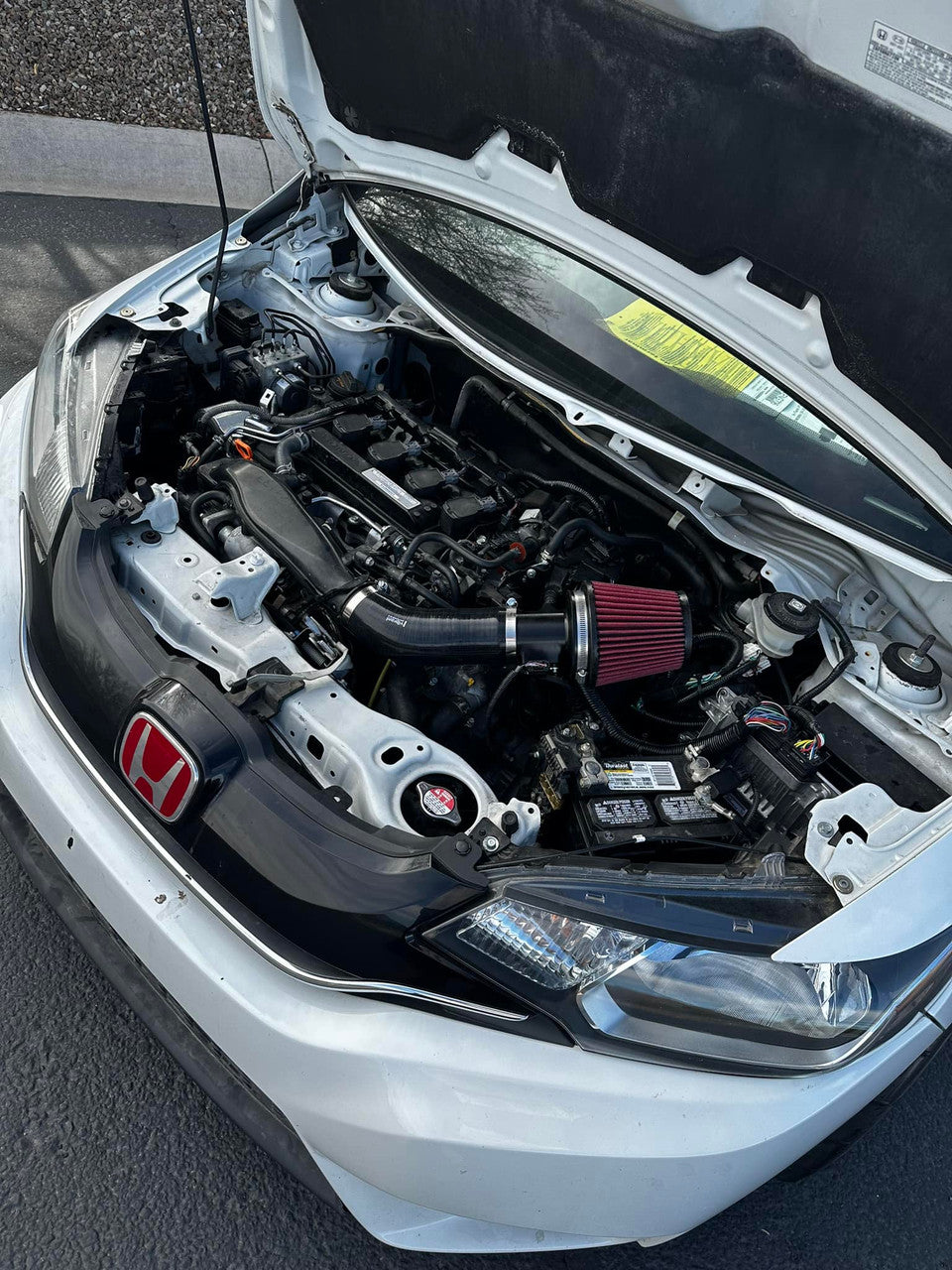
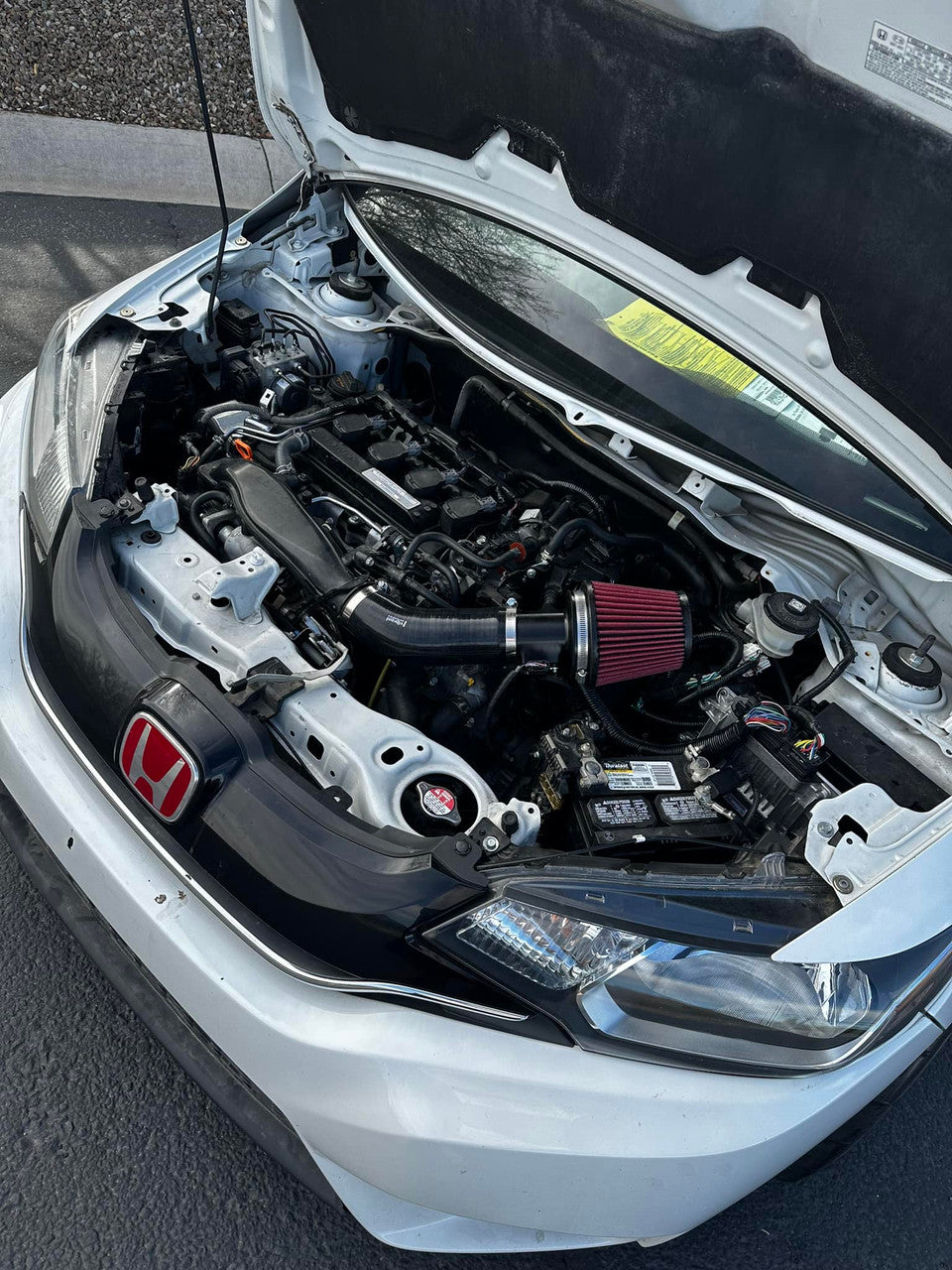
A complete kit arrives with matched components. The Garrett PowerMax assemblies include calibrated electronic actuators, clamps, hoses, and an inlet adapter, all designed to bolt to factory connections. The PRL drop-in requires no modifications at all. You trade some flexibility for a known outcome.
A custom setup makes sense when you are chasing a specific target no kit supports, or when your engine swap has no catalog path. We stock swap kits both ways so you can see the difference: a GK5 L15B7 swap kit with the RV6 turbo included for a turnkey path, and the same swap kit sold without a turbo if you already have a unit or want to choose your own.
Watch out: a "custom" build that is really just a kit with mismatched parts is the worst of both worlds. If you go custom, budget for fabrication time and expect to solve problems the kit would have solved for you.
Supporting mods for a turbo build you cannot skip
Supporting mods are the components that let a turbo make power without destroying the engine, and the non-negotiable shortlist is fuel, tuning, intercooling, and internal strength.
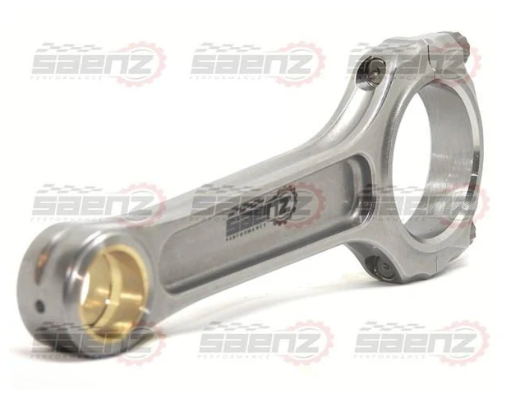
Internal strength matters more than most first-time builders expect. A larger turbo raises cylinder pressure, and stock connecting rods have a known limit. If your target pushes past what the factory rods were designed for, forged rods are cheap insurance. Our L15B 1.5L turbo performance connecting rods exist for exactly that reason.
For a deeper look at how these decisions play out on a specific platform, our guide to buying performance parts for Subaru WRX builds walks through the same logic from a different engine bay. The principles do not change: fuel, tune, cooling, internals, in that order of urgency.
- Fuel system sized to your horsepower target
- Custom tune on a dyno, not a canned file
- Intercooler rated for your boost pressure
- Downpipe and exhaust that flow with the turbo
- Heat shielding and a turbo blanket
- Internals inspected against your power goal
Checking fitment and build quality before you buy
Fitment and build quality checks happen before you pay, not after the box arrives.
Start with the vehicle. Year, engine code, and trim all change fitment. A turbo listed for a 10th Gen Civic 1.5T is not the same unit as the 11th Gen version, even though both are 1.5T PRL 4847RS turbos.
- Manifold flange: bolt pattern, port shape, and stud spacing must match your head or factory manifold
- Oil feed and drain: confirm fitting size, restrictor requirements, and that the drain can reach the block or pan at the required angle
- Coolant lines: if the turbo is water-cooled, verify inlet and outlet locations clear the factory routing
- Wastegate and actuator: electronic or vacuum, and whether the kit includes the calibrated actuator
- Downpipe: turbine outlet flange and bolt pattern must match your downpipe or the kit's
- Intercooler routing: charge-pipe path, coupler sizes, and clearance around the accessory drive
- Physical space: firewall, hood, and engine-mount clearance, especially on twin-turbo assemblies
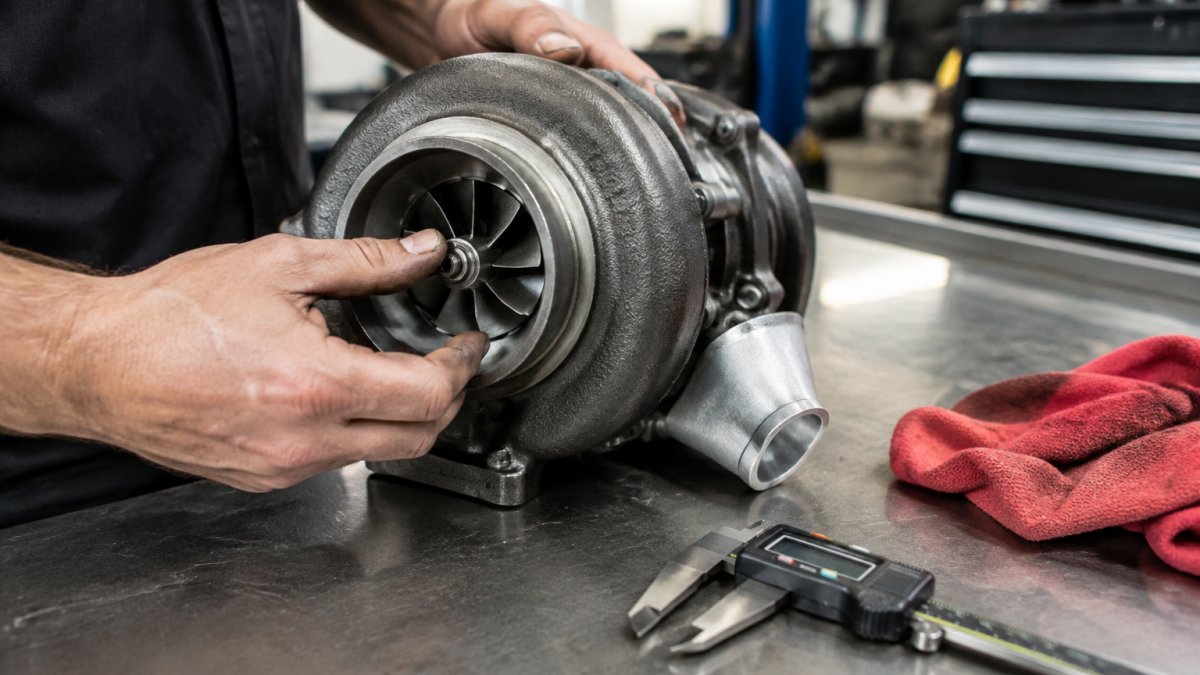
Then assess the seller and the unit itself. Legitimate turbo listings name the manufacturer, the part number, and the materials. The PRL unit specifies a 7075 point-milled compressor wheel, an Inconel turbine, and an Si3N4 ceramic bearing system.
- Verify the part number against the manufacturer's catalog
- Check for certification where emissions compliance matters
- Confirm what ships in the box, including hardware and actuators
- **Ask about stock status before ordering
- Ask about warranty terms and replacement-part availability, a turbo you cannot get rebuilt or replaced is a paperweight
Used and refurbished units deserve their own inspection before purchase. Ask for service history and the reason for removal, and be skeptical of a unit sold with no history and a fresh coat of paint.
Choosing your aftermarket turbo at Axion Performance Parts
Choosing an aftermarket turbo comes down to three decisions: your horsepower target, your platform's fitment path, and your total budget including supporting mods. Get those three right and the specific unit almost picks itself.
Axion Performance Parts has been in business since 2009, and we carry turbo upgrades for Honda, Acura, and Ford platforms, from drop-in 1.5T units to direct-fit twin-turbo assemblies. Our team provides expert support for these parts.
If you are building toward a specific number and want a turbo that already has the engineering done, start with the Garrett PowerMax direct-fit upgrade for the 2.7L EcoBoost. It is a complete assembly, emissions-certified, and it bolts to factory connections.
The build you are planning deserves parts that fit the first time. Browse our turbo catalog and get the unit matched to your target, your platform, and your budget.
The hard part of a turbo build is not picking the turbo. It is getting every supporting piece right so the turbo survives.
Frequently Asked Questions
How much horsepower does an aftermarket turbo add?
Gains depend on the turbo, the engine, and the tune. A drop-in upgrade like the PRL 4847RS for the 1.5T Civic adds meaningful mid-range and top-end power while keeping stock-like spool. Larger direct-fit kits go further: Garrett's PowerMax upgrade for the 2.7L EcoBoost supports up to 640 HP and showed gains of up to +133 WHP and +95 WTQ in testing. Treat those figures as potential, not guaranteed, since supporting mods and calibration decide what you actually make.
What is the most reliable aftermarket turbo?
Reliability comes from matching the turbo to your power goal and buying from a maker with documented testing. Garrett is the OEM turbo supplier for the 2.7L application, and its PowerMax units carry CARB emissions certification. PRL's 4847RS uses a 7075 point-milled compressor wheel, an Inconel turbine wheel, and a ceramic bearing system built for durability. A quality turbo on a conservative tune with proper oil and coolant lines will outlast a cheap unit pushed past its map.
Is a complete turbo kit better than buying parts separately?
A complete kit usually wins for a first build. Direct-fit kits include matched turbo assemblies, actuators, clamps, hoses, and adapters, so installation needs no fabrication and fitment is confirmed by the maker. Buying separately can save money if you already have an intercooler, manifold, and fuel upgrades, but you take on matching risk. For most project cars, a complete kit shortens the build and reduces the chance of a missing part stalling the install.
Can I install an aftermarket turbo without upgrading the fuel system or getting a tune?
No. A turbo moves more air, and the engine needs more fuel to match. Without upgraded injectors, a fuel pump, and a proper tune, you risk a lean condition that can damage pistons and bearings. Plan for engine management calibration as part of the budget, not an optional extra. Install the turbo, supporting fuel mods, and tune as one package so boost pressure, timing, and fueling stay within safe limits.
How do I choose the right turbo size for my engine and power goals?
Start with your realistic horsepower target, then match compressor flow to engine displacement. A turbo sized for a lower power target generally spools more quickly and stays more responsive on the street than one sized for a much higher target. Check the compressor map, confirm the turbine housing fits your manifold, and leave headroom for supporting mods. If you drive the car daily, prioritize spool over peak numbers.


